
Stories and lessons from an unexpected journey in finance.
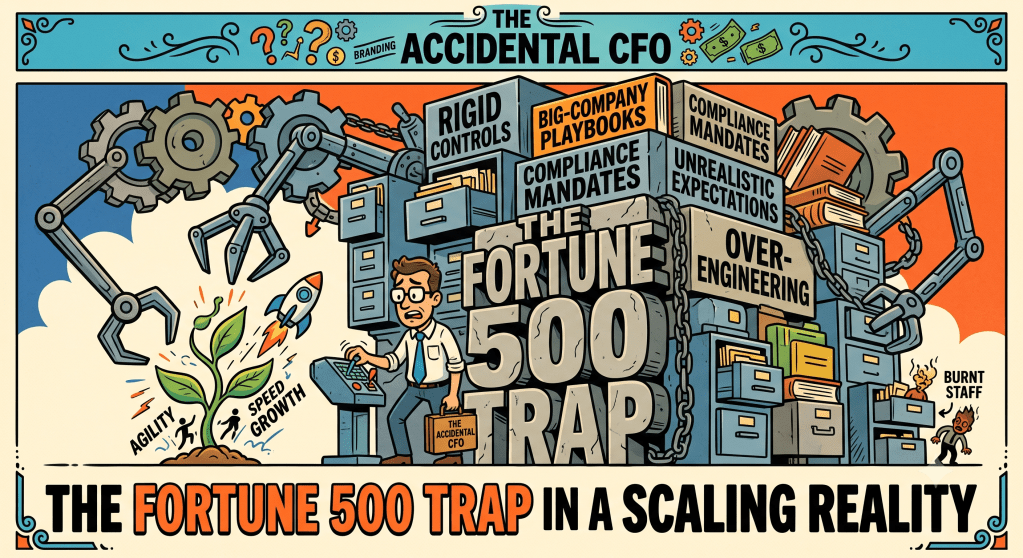
Years ago, while stepping into a chaotic, PE-backed growth company, I hired a brilliant VP of Finance straight out of a Fortune 500 behemoth. She was an absolute powerhouse of structure, control, and process.
But by week three, she was sitting in my office, visibly exhausted and frustrated. “We don’t even require POs for standard overhead invoices,” she vented. “We need to freeze everything and implement a new procurement module immediately. How is this not our top priority?”
I had to give her some tough candor. I told her: “We are trying to keep a rocket ship from shaking apart mid-flight, and you are trying to polish the engine.”
This is the ultimate trap for big-company veterans stepping into a scaling organization. You bring a multi-billion-dollar playbook to a $100 million reality. When you are accustomed to massive enterprise infrastructure, everything less than “best-in-class” feels like a five-alarm fire. But demanding immediate, rigid compliance from a lean, fast-moving team isn’t leadership—it’s just a fast track to burnout and alienated business partners.
If you want to survive the transition from enterprise to growth-stage without losing your mind, you have to trade the corporate axe for a financial scalpel. Once my VP shifted her mindset from enforcing authority to guiding a structured evolution, she became one of the most effective leaders I’ve ever worked with.
Here is the framework we used to make that pivot:
- Deploy a Realistic Maturity Model: You cannot optimize everything on day one, and you shouldn’t try. Accept that some non-core functions only need to be “Managed”—meaning they are simply reliable and compliant. Reserve your energy to fully “Optimize” only the critical processes that actively drive liquidity, margin, or strategic optionality.
- Build a Paced, Three-Year Roadmap: Sustainable transformation requires patience. Break your operational goals into an annual vision with realistic milestones. Crucially, map those initiatives to the actual headcount and budget you possess. You cannot ask a team already running at 110% capacity to absorb a massive corporate systems overhaul on nights and weekends.
- Rely on Influence, Not Mandates: In a massive corporation, you can issue an edict and expect compliance. In a smaller team, that approach destroys morale. You have to roll up your sleeves, understand the actual anatomy of the business before you change it, and celebrate incremental wins to build cross-functional credibility.
Big-company expertise is an incredible asset, but only if you have the empathy to right-size it for the team in front of you. True financial leadership is about building the load-bearing infrastructure your organization actually needs, not recreating the bureaucracy you left behind.
What is the hardest habit you have had to break when moving from a large organization to a smaller, fast-growing team?
#CFO #INERSEC #Leadership #ChangeManagement #TheAccidentalCFO


Leave a Reply