
“Stories and lessons from an unexpected journey in finance.”
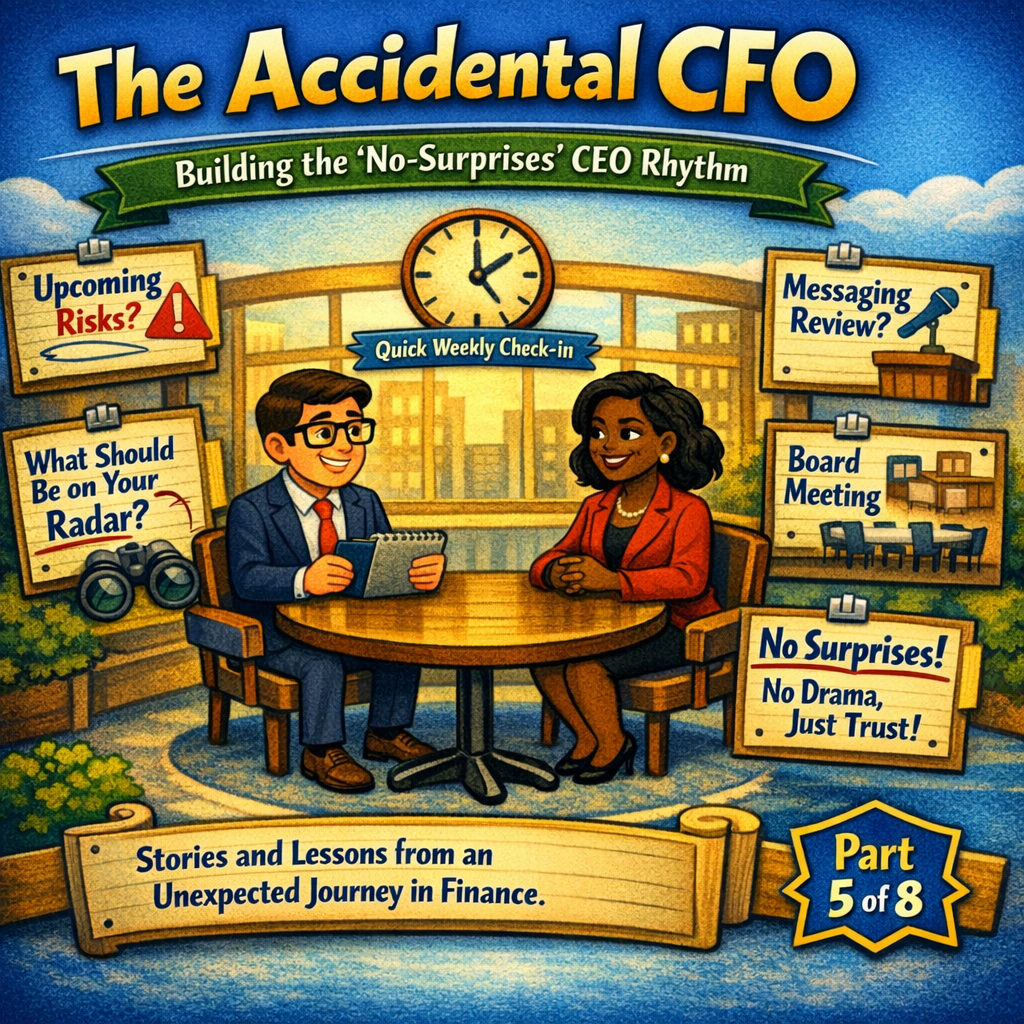
The Accidental CFO: Executive Relationships How-To Guide – Part Five
The CEO relationship is not about achieving perfect alignment on every single decision. It is about building a specific kind of trust.
The CEO needs absolute confidence that you will surface real risks early, distinguish clearly between manageable problems and existential ones, and do it all without political positioning. The CFO who has this trust gets called beforecommitments are made. The CFO who does not gets called after—when the only options left are bad ones.
The most important structural element of this relationship is a standing, short, forward-looking check-in. This is not a deep dive, and it is not a performance review. It is a 15-to-20-minute weekly conversation covering exactly three things:
- What financial risk or decision is approaching in the next two to three weeks that the CEO needs to be framing right now?
- Where is there something the CEO is about to say publicly—to the board, to the press, to the company—that Finance needs to vet first?
- What have I seen this week that you may not have seen yet, and that you should know before it becomes a problem?
This rhythm is the operational foundation of the “no-surprises” principle. To make it work, you must learn the difference between a risk that needs to be in front of the CEO today and a risk your team should handle without escalating. Over-escalation trains the CEO to discount your warnings and erodes your credibility.
What is your framework for deciding when a risk needs to be escalated to the CEO immediately versus handled quietly by your team?
Next up: Boards don’t primarily evaluate accuracy. They evaluate confidence. Here’s what that means for how you present.
#TheAccidentalCFO #inersec #CEORelationships #RiskManagement #ExecutivePresence

 INERSEC
Leave a comment