
“Stories and lessons from an unexpected journey in finance.”
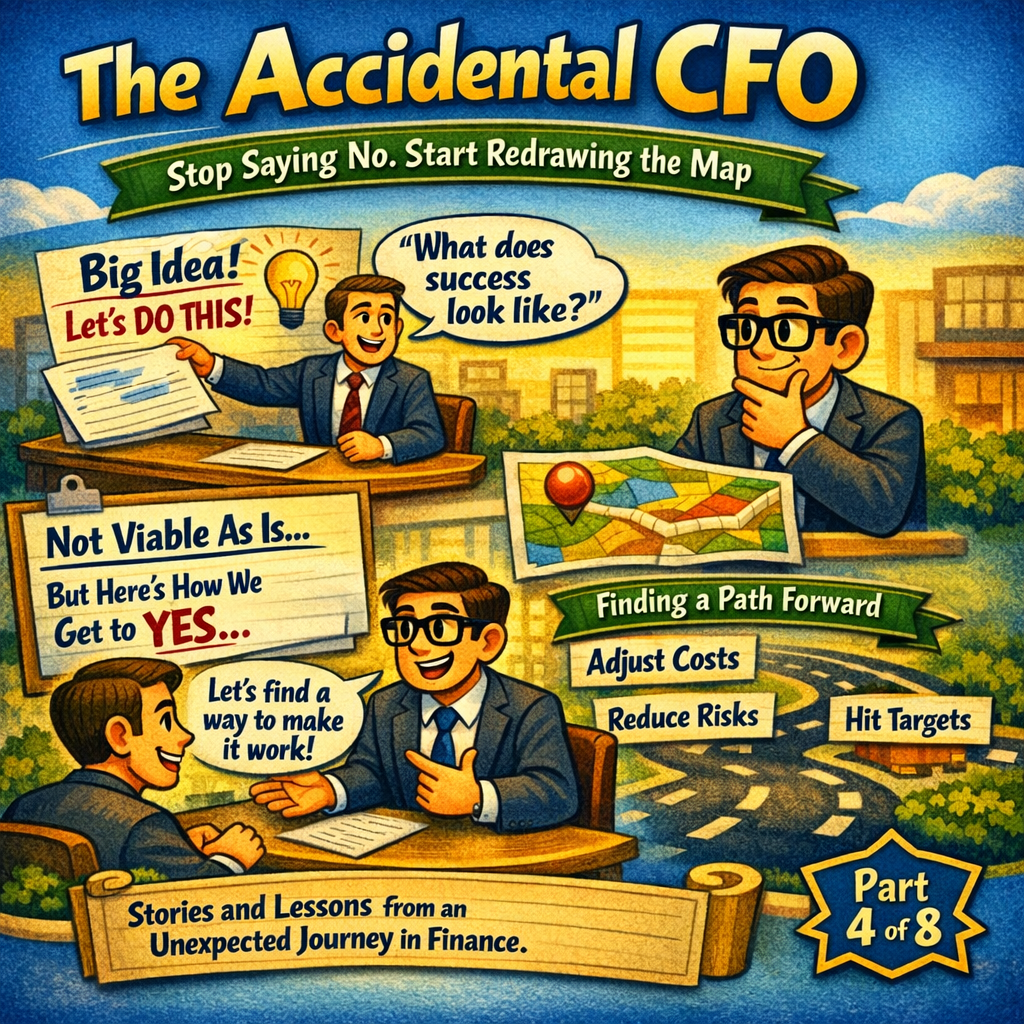
The Accidental CFO: Executive Relationships How-To Guide – Part Four
The single highest-value behavior a financial leader can develop is the ability to slow down the framing of an initiative without slowing down the initiative itself.
This is the “framing interrupt”—a set of questions that redirects a conversation from ‘here is what we want to do’ to ‘here is what we are trying to accomplish and what we need to think through’. When a peer brings you a proposal, do not respond to the solution. Respond to the problem it is trying to solve.
If a peer presents a specific solution, say: “Help me understand what outcome you’re trying to drive—before we get into this specific approach. If we could design the solution from scratch, what would success look like a year from now?” But what happens when you simply cannot approve a proposal? The CFO who is known for saying “no” has limited influence. The CFO who is known for helping peers find a path to “yes” has enormous influence.
When a proposal is not financially viable, the response is not a refusal. It is a set of conditions:
“As it stands, I can’t support this—and here’s specifically why: [insert one clear financial reason]. But I want to help you get there. Here’s what would need to be true for me to be able to say yes: [list 2–3 specific, achievable conditions]. If you can work toward those, I’m in.”
This approach is honest about the problem, demonstrates good faith, and gives your peer a roadmap rather than a brick wall.
How do you successfully pivot a difficult conversation from a hard “No” to a collaborative “Yes, if…”?
Next up: The CEO relationship isn’t about alignment on every decision — it’s about one specific kind of trust. We’ll break down exactly how to build it
#TheAccidentalCFO #inersec #NegotiationSkills #StrategicPartner #BusinessGrowth


Leave a Reply