
“Stories and lessons from an unexpected journey in finance.”
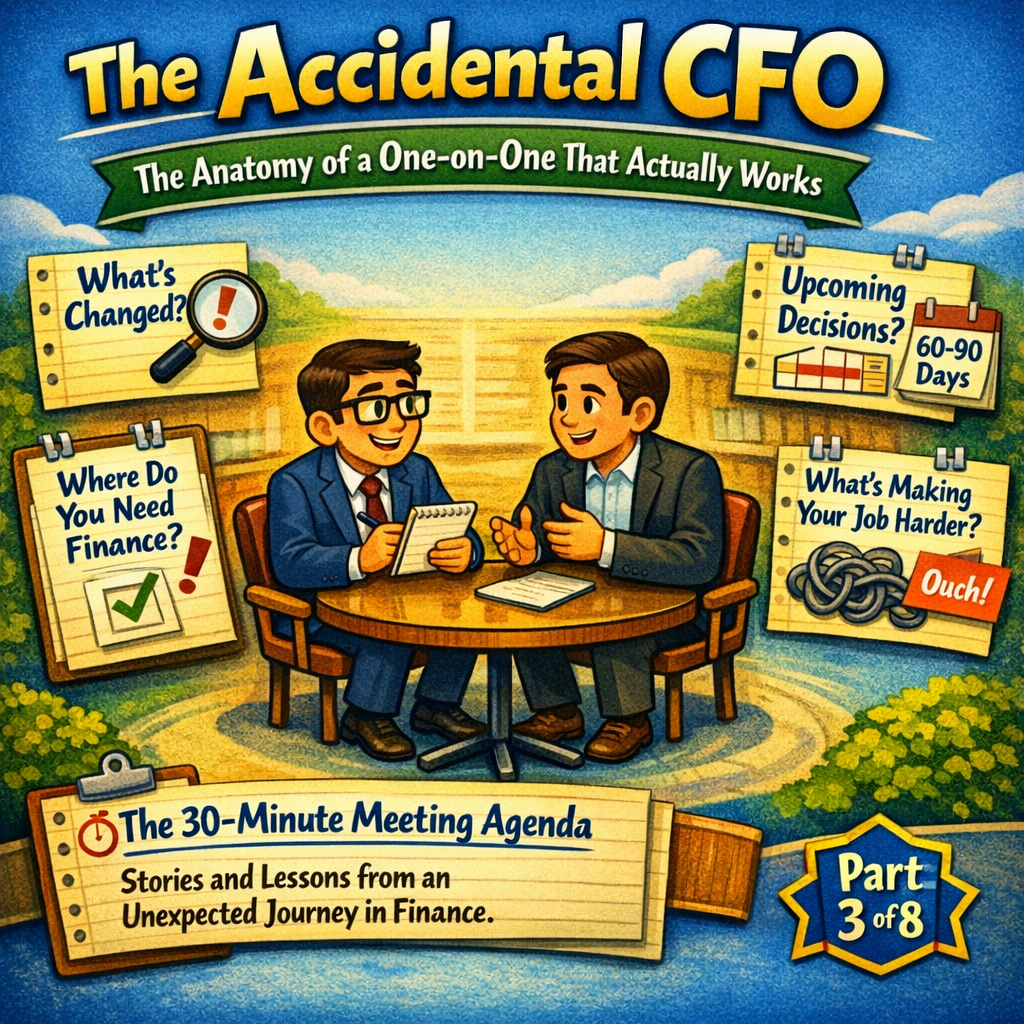
The Accidental CFO: Executive Relationships How-To Guide – Part Three
Once you have established a working relationship with your peers, the standing one-on-one is your primary operating mechanism. However, the mistake most CFOs make is letting these meetings devolve into backward-looking status updates or problem-escalation sessions.
These meetings should be forward-looking decision conversations.
To make this shift, you need a standing agenda template. Use this structure for every peer one-on-one. Put it right in the calendar invite. The discipline of a consistent agenda changes how peers prepare and what they bring to you.
The 30-Minute Meeting Template:
- 0–5 min: What has changed since we last spoke that I should know about? (Goal: Intelligence gathering and early warning detection).
- 5–15 min: What decisions are you taking to leadership or the board in the next 60–90 days? (Goal: Map upcoming exposure points and get ahead of board prep).
- 15–25 min: Where do you need Finance involved before you finalize your recommendation? (Goal: Change the moment Finance enters and shape the framing).
- 25–30 min: What is Finance doing (or not doing) that makes your job harder? (Goal: Eliminate friction and build trust through candor).
There is one key rule to enforce: If a one-on-one does not surface at least one upcoming decision or forward-looking risk, it was a status meeting, not a relationship investment. If that happens, reset the agenda for next time.
What is the one agenda item you insist on having in every recurring meeting with your peers?
Next up: The CFO who always says no has limited influence. The one who helps peers find a path to yes has enormous influence.
#TheAccidentalCFO #inersec #EffectiveMeetings #ManagementStrategy #FinancialLeadership


Leave a Reply