
“Stories and lessons from an unexpected journey in finance.”
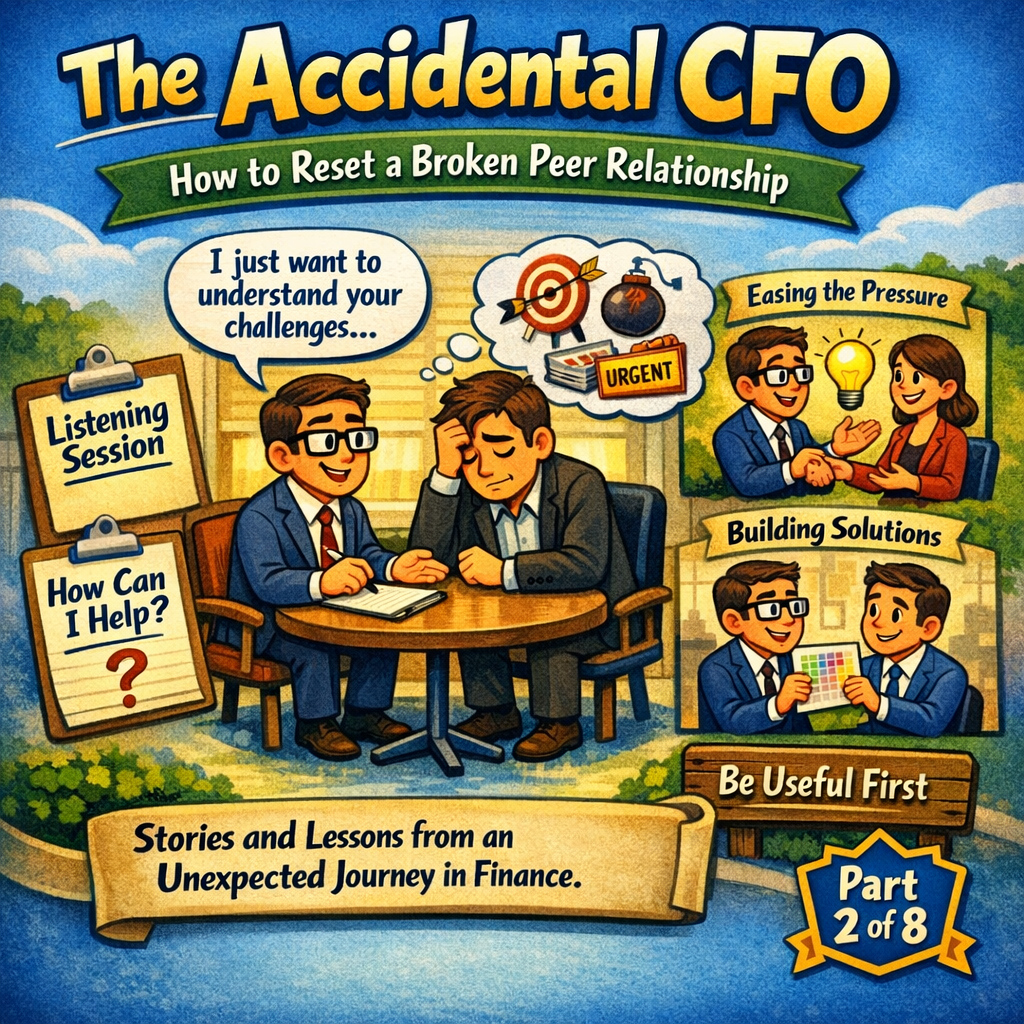
The Accidental CFO: Executive Relationships How-To Guide – Part Two
Influence with your C-suite peers is not claimed; it is earned. It comes from a track record of making their work easier, helping them avoid problems, and being someone who creates options rather than closing them.
The foundational principle is this: you must become useful before you need influence. The CFO who is seen as a valued thinking partner gets called early. The CFO who is seen as a review gate gets called last.
The practical implication is that the first thing you do with each peer is not to set expectations or establish a financial process. It is to understand their biggest pressure and figure out how Finance can actually help them solve it. That first conversation changes the entire texture of the relationship.
Whether you are starting fresh or rebuilding a strained dynamic, the opening move is to request a one-on-one and frame it strictly as a listening session.
Here is exactly what you say:
- “I want to spend this time understanding your world—what you’re trying to accomplish, where you feel like Finance has been helpful or hasn’t been, and what you’d want to be different. I just want to understand what success looks like from your chair.”
- Then ask: “What’s the decision you’re most worried about getting wrong in the next six months?”
- And finally: “Where does Finance show up in ways that slow you down? I want to know that—even if it’s uncomfortable.”
You are making the relationship about them before it is about you, signaling that Finance is a resource, and gathering the intelligence you need to be genuinely useful.
What is the very first question you like to ask when you sit down with a newly hired peer executive?
Next up: The exact 30-minute meeting structure that transforms your standing one-on-ones from status updates into strategic conversations.
#TheAccidentalCFO #inersec #LeadershipDevelopment #BusinessPartnering #CSuite


Leave a Reply