
“Stories and lessons from an unexpected journey in finance.”
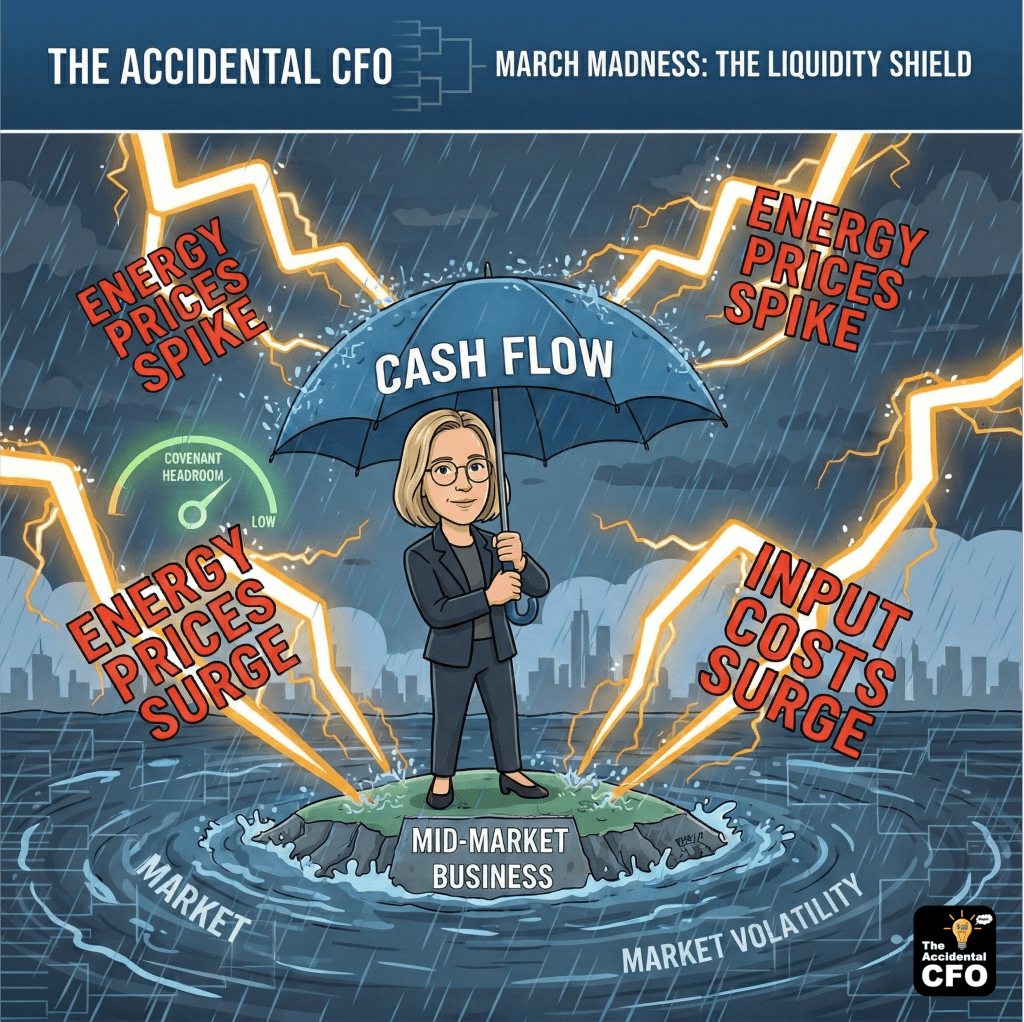
In the last few days, we’ve seen energy prices surge by 8.8% in a single trading session. For most mid-market companies, this isn’t a distant geopolitical headline; it’s a direct, unbudgeted hit to the COGS. When input costs spike this violently, the CFO has to stop staring at the P&L and start obsessing over the Balance Sheet.
Why Liquidity Trumps the Income Statement
In a stable environment, we manage for margins. In a volatile one, we manage for oxygen.
A 10% miss on the bottom line is a boardroom headache; a 10% shortfall in working capital because of surging supply chain costs is a corporate crisis. If you aren’t careful, “temporary” energy-driven inflation can quietly eat your covenant headroom before you’ve even finished your February close.
As the CFO, your job shifts from being a reporter of history to a protector of liquidity. You need to know—down to the dollar—how much “burn” your current cash position can handle before the volatility compromises your operational independence.
Applying Diagnostic Discipline
This is where you earn your keep. You have to separate the noise from the structural shifts.
- The Noise: Is this a 30-day spike we can absorb by deferring discretionary spend?
- The Structure: Or is this a fundamental shift in vendor pricing that requires an immediate customer surcharge?
If you treat a structural shift like noise, you’ll bleed out slowly. If you treat noise like a structural shift, you might alienate customers with unnecessary price hikes. The differentiator is speed of interpretation.
The 90-Day Playbook for “March Madness”
If you’re feeling the squeeze, don’t try to fix the entire year at once. Focus on the 80/20 of agility:
- Revenue Drivers: Identify which customers have the shortest payment cycles and prioritize those relationships to keep cash flowing in.
- Variable Elasticity: Where can you flex costs downward today? This isn’t about a hiring freeze; it’s about identifying “discretionary” spend that doesn’t impact the next 90 days of delivery.
- Covenant Watch: Run “What If” scenarios on your debt triggers now. Boards don’t hate bad news; they hate surprises.
Forecasting isn’t about being a fortune teller. It’s about being the person who ensures the lights stay on while everyone else is still arguing about the “why”. Accuracy is great, but in March, optionality is better.
Engagement Question:
When energy or input costs spike mid-quarter, what is the very first lever you pull to protect your 90-day cash flow?
#TheAccidentalCFO #Liquidity #MiddleMarket #FinanceLeadership #inersec


Leave a Reply