
Stories and lessons from an unexpected journey in finance.
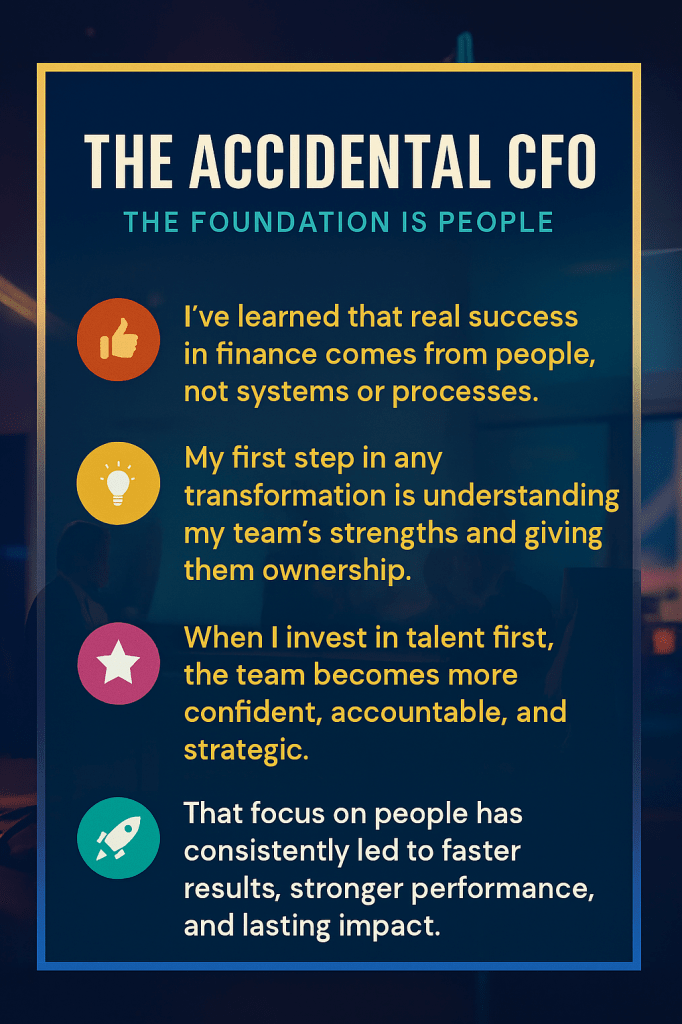
After decades building finance functions and leading transformations, I’ve realized the most overlooked driver of success isn’t the system, ERP, processes, or reports — it’s the people.
A strong finance team doesn’t just close the books. They translate data into insights, anticipate risks, and collaborate with business leaders to drive meaningful outcomes. Yet too often, companies focus on systems and processes while neglect talent development. The result: brilliant plans fail to execute, insights sit idle, and morale suffers.
Early in my CFO journey, I inherited a 150-person finance team stretched by rapid growth. They were capable but fragmented — strong individuals, weak cohesion. Instead of rushing into a system overhaul, I started by understanding each person’s strengths and filling gaps with the right expertise. Clear ownership and accountability followed.
One standout moment came with FP&A. The team was reporting numbers but not driving action. Together, we redefined success — every report had to connect to measurable business outcomes. I encouraged them to present directly to business leaders, shifting their mindset from reporting to influencing. Within months, they were shaping pricing, product mix, and resource allocation decisions.
By focusing on talent first, I freed myself to tackle strategic growth initiatives, including two major acquisitions and a successful sale to private equity. At the same time, the team flourished. Controllers and senior accountants gained autonomy to own processes, while FP&A leads became trusted advisors to the business. Their confidence and engagement grew, and so did their ability to influence outcomes.
This investment in people didn’t just improve morale — it translated directly into measurable results. Close cycles accelerated, reporting accuracy improved, profitability increased, and the organization was ready to scale with the company’s ambitions. The difference between a good finance organization and a great one isn’t just in processes or technology; it’s in how much the team can think beyond the ledger, challenge assumptions, and shape the business.
Leadership also means coaching for growth. High-potential team members need mentorship, exposure to decision-making, and opportunities to operate strategically under pressure. When the team grows, the function grows, and the CFO can focus on value creation rather than being consumed by operational firefighting.
💡 Question for leaders: How do you balance investing in your finance team while still delivering near-term business results?
#FinanceLeadership #TheAccidentalCFO #CFOInsights #TeamBuilding #inersec

 INERSEC
Leave a comment