
“𝘚𝘵𝘰𝘳𝘪𝘦𝘴 𝘢𝘯𝘥 𝘭𝘦𝘴𝘴𝘰𝘯𝘴 𝘧𝘳𝘰𝘮 𝘢𝘯 𝘶𝘯𝘦𝘹𝘱𝘦𝘤𝘵𝘦𝘥 𝘫𝘰𝘶𝘳𝘯𝘦𝘺 𝘪𝘯 𝘧𝘪𝘯𝘢𝘯𝘤𝘦.”
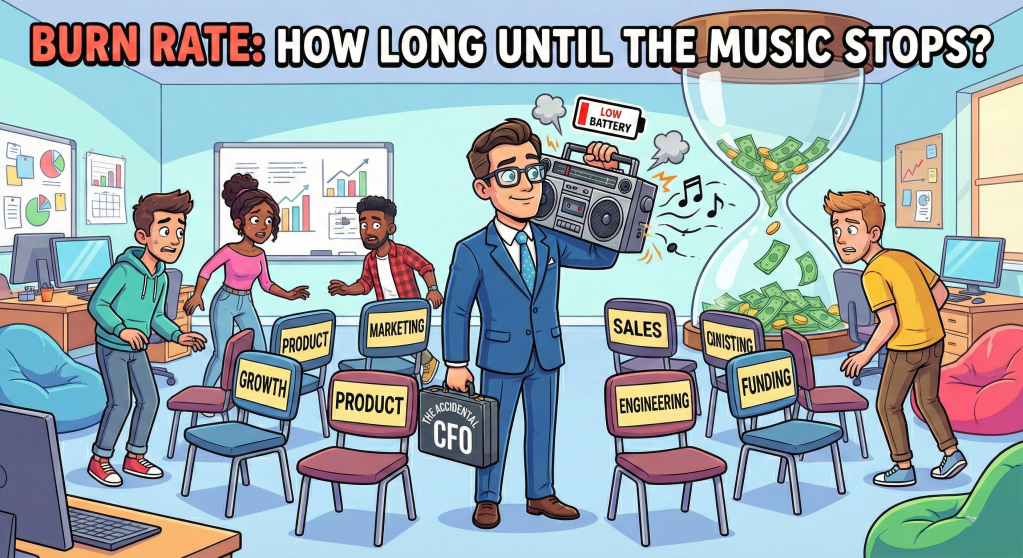
In the startup world, “Burn Rate” is often whispered about with the same mix of reverence and fear as a ghost story told around a campfire. But if you’re a CFO, you know that it shouldn’t be a mystery. It’s simply the speed at which your company is consuming its cash reserves before it starts making enough to cover its own costs.
Think of it as a high-stakes game of musical chairs. The “burn” tells you exactly how much time you have before the music stops and you need to find a seat—usually in the form of a new funding round or, ideally, reaching profitability.
𝗚𝗿𝗼𝘀𝘀 𝗕𝘂𝗿𝗻 𝘃𝘀. 𝗡𝗲𝘁 𝗕𝘂𝗿𝗻: 𝗞𝗻𝗼𝘄 𝘁𝗵𝗲 𝗗𝗶𝗳𝗳𝗲𝗿𝗲𝗻𝗰𝗲
To manage the burn, you have to understand what’s actually in the fire.
• 𝗚𝗿𝗼𝘀𝘀 𝗕𝘂𝗿𝗻: This is the total amount of cash leaving your bank account every month. It’s your rent, your AWS bill, and most importantly, your payroll. It doesn’t care if you made a sale or not.
• 𝗡𝗲𝘁 𝗕𝘂𝗿𝗻: This is the “true” burn. It’s your Gross Burn minus whatever revenue you brought in. This is the actual hole in your pocket.
If your Gross Burn is $200k but you brought in $50k in revenue, your Net Burn is $150k. That $150k is what determines your survival.
𝗧𝗵𝗲 𝗥𝘂𝗻𝘄𝗮𝘆: 𝗬𝗼𝘂𝗿 𝗠𝗼𝘀𝘁 𝗜𝗺𝗽𝗼𝗿𝘁𝗮𝗻𝘁 𝗡𝘂𝗺𝗯𝗲𝗿
As I mentioned in my post on “The Startup CFO”, one of our primary roles is “Translator.” You have to translate that Net Burn into 𝗥𝘂𝗻𝘄𝗮𝘆.
Runway = Current Cash Balance / Monthly Net Burn
If you have $1.5M in the bank and your Net Burn is $150k, you have 10 months of runway. That is 10 months to build the product, find the market, or convince an investor that you’re the next big thing. As CFO, you don’t just look at this as a spreadsheet cell; you look at it as the 𝗹𝗶𝗳𝗲 𝗲𝘅𝗽𝗲𝗰𝘁𝗮𝗻𝗰𝘆 of the mission.
𝗠𝗮𝗻𝗮𝗴𝗶𝗻𝗴 𝘁𝗵𝗲 𝗛𝗲𝗮𝘁
When the burn gets too high, the instinct is to become the “Department of No.” But a great CFO doesn’t just cut costs; they optimize for 𝘃𝗲𝗹𝗼𝗰𝗶𝘁𝘆. Is that $20k a month in marketing spend increasing our “fuel” (revenue) fast enough to justify the heat? If not, the music is going to stop much sooner than we planned.
Managing burn isn’t about being stingy; it’s about being a steward of time. Because in a startup, cash is time. And once you run out of time, the music stops for everyone.
𝗤𝘂𝗲𝘀𝘁𝗶𝗼𝗻: What’s your “Safety Buffer” for runway? Do you start sweating when you hit 6 months, or are you a “12-month minimum” kind of leader?
#inersec #StartupLife #TheAccidentalCFO #CashFlow #VentureCapital

 inersec
Leave a comment