
“Stories and lessons from an unexpected journey in finance.”
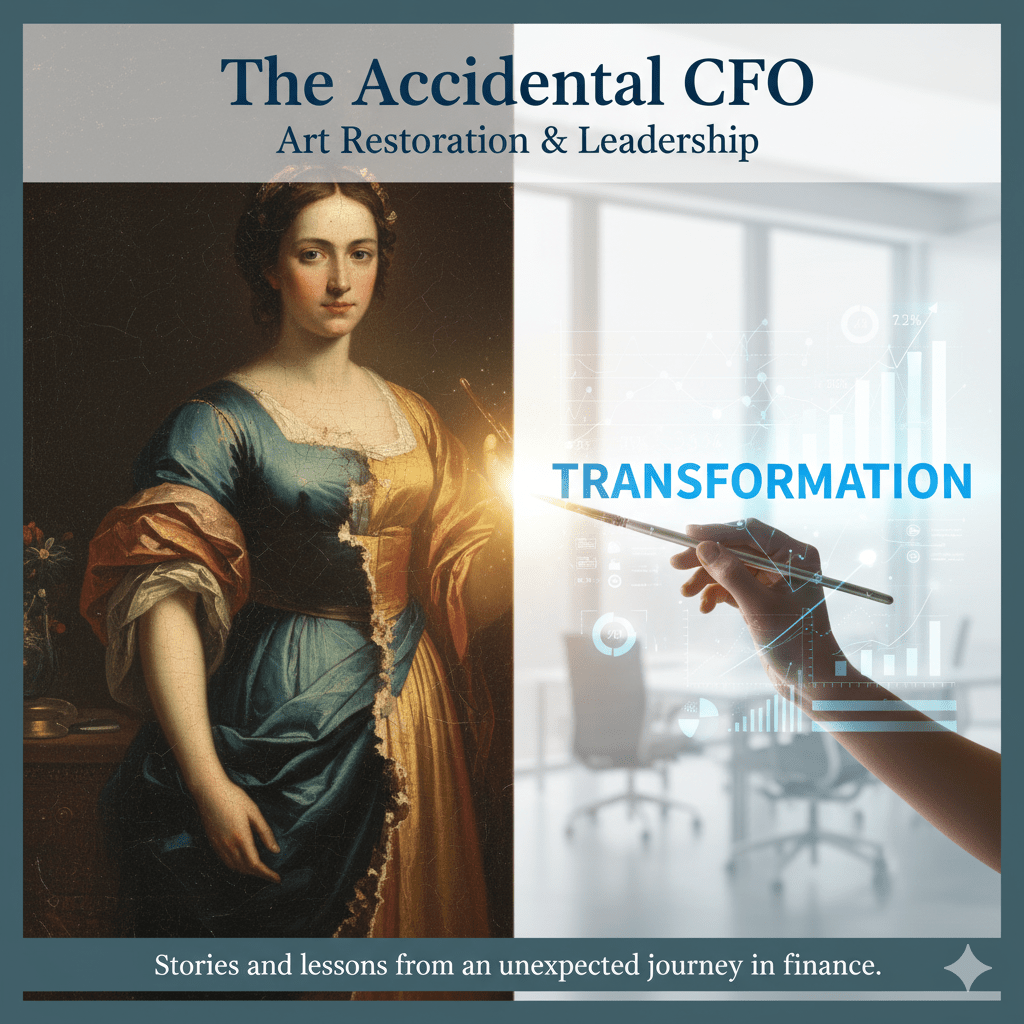
This fall, my daughter Eliza began her sophomore year at Scripps College, where she is studying Art Conservation. For her, this means diving deep into the science and craft of restoring and preserving artworks—learning how to study a piece, understand its history, and carefully bring it back to life without erasing its original character.
As she’s shared her experiences, I’ve been struck by how closely the principles of art conservation align with leadership, particularly in my own work as a CFO helping businesses through transformation. Whether restoring a centuries-old painting or revitalizing a company facing headwinds, the process is surprisingly similar: patience, detail, and care.
Patience in the Process
Art conservation isn’t fast. Each layer of dust, varnish, or damage must be carefully addressed. One rushed decision could cause lasting harm. The same is true in business: restoring financial stability or rebuilding culture takes time. Leaders must balance urgency with the discipline to see things through methodically.
Respecting the Original
Conservators don’t turn a Renaissance painting into modern art. Their role is to honor what the artist created, enhancing without overshadowing. In leadership, the same principle applies: respect the company’s DNA. Transformation doesn’t erase what came before—it reveals and strengthens the best of it.
Attention to Detail
A faint crack in a canvas can hold clues to a painting’s story. In business, small oversights—a misaligned contract, a reporting error, an ignored customer signal—can compound into bigger issues. Strong leaders, like skilled conservators, notice the details while keeping the bigger picture in mind.
Care and Humility
Perhaps most important, art conservation requires humility. Conservators don’t sign their names across the canvas. Their success is measured by how seamlessly the original shines through. Leadership works the same way—it isn’t about the leader’s imprint, but about creating conditions where teams, ideas, and businesses can thrive.
Watching Eliza step into this field has been a reminder: whether in art or business, restoration isn’t about fixing what’s broken. It’s about honoring what’s already there, protecting its integrity, and carefully guiding it back to its best form.
Because beneath the dust, the cracks, and the faded colors—whether in a painting or a company—the brilliance is still there, waiting to be revealed.
👉 What about you—have you ever had to “restore” something (a project, a team, a business) and uncover the masterpiece beneath?
#TheAccidentalCFO #inersec #Leadership #Transformation #Growth

 inersec
Leave a comment